Skip to product information

Tung Oil

Tung Oil

Regular price $29.00 USD
Regular price Sale price $29.00 USD
Sale Sold out

For thousands of years, tung oil has been used to protect wood. It penetrates the fibers and cures within them, forming a durable, water-resistant finish that preserves the wood’s natural character rather than covering it with a plastic film.

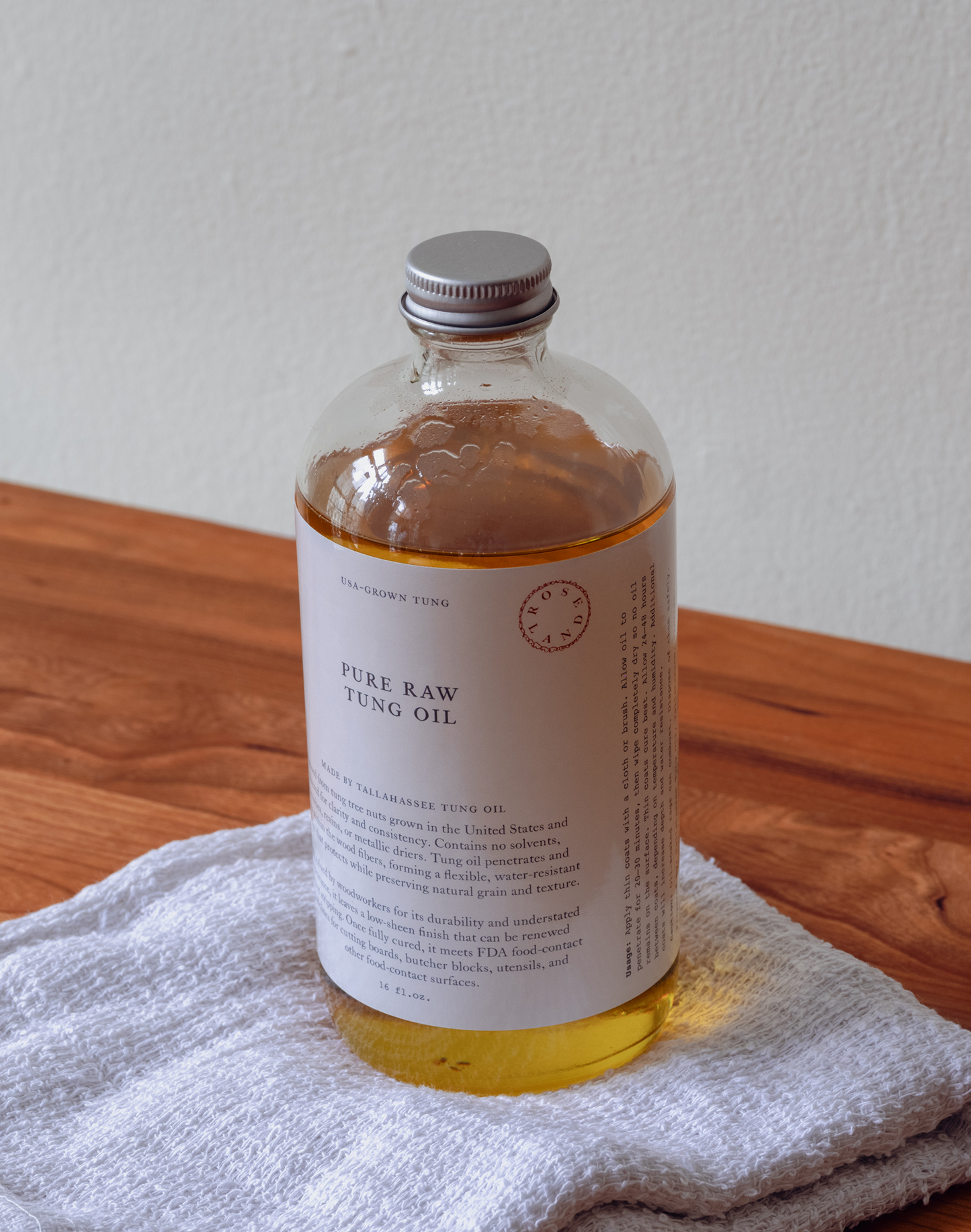
Tallahassee Tung Oil is made in small batches and is the only tung oil produced in the United States using American-grown tung tree nuts. Filtered for clarity and consistency, it contains no solvents, additives, synthetic resins, or metallic driers.

Once fully cured, pure tung oil meets FDA food-contact guidelines, making it an excellent choice for cutting boards, butcher blocks, wooden utensils, bowls, countertops, children’s toys, and other food-contact surfaces. The finish enhances grain with a soft, natural sheen and can be renewed over time without stripping or refinishing.

While linseed oil gives wood a warm, softly finished appearance, tung oil dries clearer and offers greater resistance to moisture and wear. 

Each bottle contains 16 fluid ounces.

View full details

Made by Tallahasee Tung Oil in Tallahassee, Florida

Tallahassee Tung Oil is produced from American-grown tung tree nuts, pressed and filtered in small batches for consistency and purity. As the only producer of tung oil made in the United States, they continue a material that has protected wood for thousands of years while keeping the process simple: pure oil, carefully prepared, with nothing added.

Tung Oil versus Varnish

Tung oil penetrates into the wood and cures within its fibers, creating a durable, water-resistant finish that becomes part of the material itself. It leaves a natural, low-sheen surface that can be renewed as the wood ages. Varnishes and polyurethanes instead build a hardened film on the surface. While that film offers protection, it eventually wears, scratches, or peels and often requires sanding and refinishing to repair. We prefer oil because it works with the wood rather than covering it, allowing the material to age naturally while remaining repairable.

Sometimes a great finish is one you hardly notice. Tung oil penetrates and protects the wood while preserving its natural character.” — T. Luke Sherwin, Owner
  • Water Resistance That Lasts

    As tung oil cures, it polymerizes within the wood fibers, creating one of the most water-resistant natural oil finishes available. It protects against moisture while allowing the wood to retain its natural feel and appearance.

  • Made to Be Maintained

    A finish should improve with age—not require replacement. Tung oil can be cleaned, lightly sanded, and reapplied whenever the surface needs attention. No stripping. No refinishing. Simply renew the finish and continue using the piece.

  • American Tung

    Made from tung nuts grown in the United States and pressed into oil for finishing. Domestic sourcing allows for better consistency in both the raw material and the final product.

  • Zero VOCs

    This is 100% tung oil—no solvents, no metallic driers, no synthetic additives. In its pure form, tung oil contains no added VOCs and cures through exposure to air rather than evaporation.

  • Free Shipping

    Carefully packed and shipped free via UPS Ground.

3% of Profits to Bring back the American Chestnut

At Roseland, we're passionate tree buffs and are committed to helping bring back the iconic American chestnut to its native range. We will donate 3% of all unit-level profits at the end of 2026 to the American Chestnut Foundation and other similar efforts.

Frequently Asked Questions

How often should I apply the oil?

Indoor Furniture: Reapply when the wood begins to look dry or loses depth and sheen. For most furniture, this may only be needed every few years.

Outdoors Furniture: Reapply annually for covered furniture and approximately every 6–12 months for fully exposed furniture. Wet or sunny conditions may require more frequent application.

What is the difference between linseed oil and tung oil? 

Both are plant-based drying oils that penetrate wood and cure within its fibers. Linseed oil produces a warmer, softer finish and tends to penetrate deeply. Tung oil cures to a harder finish with greater resistance to water and wear. Both preserve the natural grain and can be renewed without stripping.

Is tung oil food safe?

Pure tung oil is suitable for food-contact surfaces once fully cured, making it appropriate for cutting boards, butcher blocks, wooden utensils, and similar surfaces.

When should I use tung oil instead of linseed oil?

Use tung oil where greater resistance to moisture and wear is needed, such as tabletops, kitchen surfaces, and outdoor furniture. Linseed oil is well suited to interior furniture where a warm, low-sheen finish is preferred.

How long will this bottle last?

Coverage varies depending on the wood, surface condition, and number of coats. A 16 fl. oz. bottle will cover approximately 50 square feet based on the manufacturer’s coverage estimate.

Is it compatible with Roseland’s wooden products?

Yes. Tallahassee Tung Oil is used on many Roseland products, including the Kitchen Island and Wave Hill Chair. It can be used to maintain products originally finished with tung oil.

Does tung oil have an odor?

Pure tung oil has a noticeable natural odor when freshly applied, often described as nutty or earthy. The odor diminishes as the oil cures.

How should I store the oil?

Store tightly sealed in a cool, dark place away from heat and direct sunlight.

How do I use it safely?

Tung Oil can pose a combustion risk, particularly on oil-soaked rags. We recommend not leaving freshly oil-soaked rags on surfaces or in household trash. We suggest laying oil-soaked rags or cloths flat and spread out outdoors away from buildings and combustible materials until completely dry.